Saturday, July 03, 2010

Bats in the belfry

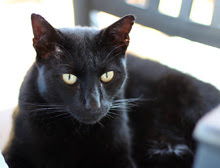
I was awakened this morning around one-thirty. I heard faint muffled noises. It was as if someone was walking up the stairs very, very slowly. The stairs are lined with cardboard right now to protect them until they're finished. At first I thought it was Callie trying to come up. Then I thought it was Ken. But why take one step every ten seconds? And he was in bed, anyway.

Light patterns on the ceiling of a cave gallery at the Monmousseau winery.

I got up and checked the stairwell. Empty. I went downstairs to find Callie sleeping. I even ventured down to see if Bertie was in the garage; he was still out gallivanting (I'll have to speak to him about that). I went back to bed convinced that I was hearing things. I was almost asleep when I heard the noise again. I got up to look, but it stopped, so I went back toward the bed. Then I felt a little breeze as something flew past my head. That's a pretty fast moth, I thought. I turned the light on and there it was. A bat was in the room.

It flew around the room and landed on a beam. Then it took off and did the same again. The noise I was hearing was the bat landing on the beam and repositioning itself for takeoff. By this time Ken was awake and was opening the windows wide as I was trying to guide the bat toward them. I started swinging a tee-shirt around to help move the bat in the right direction.

Then I hit him. Plop. He hit the floor. I scooped him up with the tee-shirt and tossed him out the window. But he didn't fly. Splat. I had visions of his vampire cousins coming for me in the night. But I managed to fall asleep and nearly forgot about him.

We found him dead on the balcony below the window this morning. Out of respect, I didn't take any photos before I disposed of the body. Poor little guy.

Friday, July 02, 2010

Disgorging

Dégorgement, in French, is the step in the sparkling wine making process that removes the sediments trapped in the neck of the bottle after riddling. The process is completely automated these days. At Monmousseau there is a series of machines that handle it all under human supervision. The first step after loading the bottles upside-down into the machines is freezing.

This machine pops the caps and catches the frozen sediments as they are forced out of the bottle.

The first machine freezes the neck of the bottle where the sediments have collected. The bottles are progressively moved through the freezing liquid by a long-armed robot that finishes by placing the bottles, rows of about fifteen at a time, upright onto a conveyor belt. From there the bottles are visually inspected by one of the winery's staff.

Video inspection of the wine level, cork, and cage.

Next, another machine removes the bottle cap. The pressure built up in the bottle during the fermentation step forces the frozen "plug" out. Invariably, some of the good wine goes out during this process. We saw another staff member with a little tube adding small amounts of wine back into the bottles at this point to ensure the level was consistent from bottle to bottle. In Champagne, what's added can actually be sweetened wine in a process called dosage. But at Monmousseau we were told that the bottles were topped off only with the same wine.

The section of the plant where bottles are labeled and packed for shipment.

Each bottle is then corked and secured with a capsule and wire cage. Another machine uses a video camera to check that the level of wine in the bottle is acceptable and to ensure the bottle is properly corked and caged. Then it's on to labeling and packing.

Thursday, July 01, 2010

Riddle me this

The Monmousseau winery specializes in sparkling wines made using the Champagne process, or méthode champenoise. Of course, French wine industry rules prohibit winemakers outside the Champagne region from using those words, so producers of sparkling wines in other regions use the words méthode traditionnelle to describe the process.

A hand-crank riddling machine at Monmousseau. Each cube or palette holds 520 bottles.

The sparkling wine process includes a second fermentation inside the bottle. Sugar and yeast are added to the still wine and the bottle is capped and stored on its side. The yeast consumes the sugar but its waste, carbon dioxide, cannot escape the bottle and stays dissolved in the wine. During this second fermentation, sediments (dead yeast) collect on the bottom of the bottle. These sediments need to be removed from the bottle before it can be corked and sold.

To move the sediments down to the neck of the bottle, wine makers would use special wooden racks that hold each bottle by the neck. A worker would turn each bottle one quarter turn daily and at the same time increase its angle slightly in the rack. This action, which takes considerable skill, would slowly move the sediments down toward the neck of the bottle until, about eight weeks later, they would all be collected at the cap. This is the process known as "riddling" or remuage in French.

These days, only very special bottles are riddled manually. Instead, large crates are turned using gears and cranks so that thousands of bottles can be riddled faster and with less effort (and skill). Many riddling machines are fully automated and require very little human intervention. The riddling process that once took skilled workers eight weeks can now be completed in a matter of days or even hours.

Wednesday, June 30, 2010

Retail therapy

Monmousseau is a rather large operation compared to what we're used to in our little corner of the Touraine region. Near us, most growers and vintners are small family operations. Production is small to moderate, and the winemaker is usually the person who grows the grapes. There are a few co-ops, but their scale is moderate. Monmousseau, on the other hand, is larger, corporate, and set up to receive visitors with scheduled tours throughout the day. Our tour guide told us that they currently have about four million bottles stored in their cellars.

The Monmousseau retail shop and entrance to the art exhibit.

If you're in the area, I'd recommend going to see it, especially if you've not seen a sparkling wine operation before. The tour (which costs a few euros) is long enough to be interesting, but short enough not to be boring. You see the caves and the guide explains the sparkling wine process step by step. Then you go through the bottling and packing plant. At the end of the tour there is a tasting, of course, after which you can wander around in the retail shop. Not only are their premium wines a good deal, but when we were there they had a bargain bin set up and many good wines were on sale. There are also do-dads, t-shirts, postcards, etc.

A statue of a wine master St. Vincent, patron saint of grape growers, above the retail shop.

There's often a exhibition of local art in the galleries just behind the shop that you are invited to enjoy while you wait for the next tour. And on a hot day, especially, the tour through the caves (cellars) is refreshingly cool.

Tuesday, June 29, 2010

Put a cork in it

Or not. These are bottles of sparkling wine that are fermenting at the Monmousseau wine caves near Montrichard (about twenty minutes from us). They're not corked yet, but closed with bottle caps. Once the fermentation is done, the bottles are riddled to move the sediments down to the neck. The sediments are then removed and the cork and capsule are put on.

Wine made from chenin blanc grapes becoming bubbly.

We took the tour of the caves and bottling plant yesterday with Peter and Jill. There was a French couple on the tour with us, so we were six all together. The guide did the tour both in English and in French. She was very good, friendly, and informative. We had a nice taste after the tour and bought a bunch of bottles.

Merlan filets with seared vegetables and a sprig of mint from our garden.

After that, we stopped in town at a bakery, a charcuterie, and a grocery store. Then it was home for a light lunch of boudin noir (blood sausages) cooked on the grill and a salad of leeks in vinaigrette. For dinner, Peter made a fish dish with merlan filets served on pan-seared vegetables (pepper, zucchini, eggplant, and red onion). We washed it all down with bottles of still and sparkling wines from Monmousseau.

Monday, June 28, 2010

Our pylon

This tower, or pylône in French, is a few kilometers west of our house just at the point where the vineyards give way to forests and fields of other crops. I presume it's a tower for microwave transmitters, the kind the telephone companies use for their signals. But I'm not certain of that.

The pylon is visible from the vineyards out behind our house.

At any rate, the tower stands alone near an intersection of small roads that connect St.-Aignan with Orbigny and Céré-la-Ronde. It's even marked on the maps. And curiously, there is no blinking red light on top to warn aircraft of its presence. And we do have air traffic around us. Light planes, sailplanes, the occasional helicopter, frequent ultra-light motorized hang-gliders, and hot-air balloons.

I suppose most of those things don't fly after dark, so the red and white painting does the trick.

Sunday, June 27, 2010

The vineyard on a summer Sunday morning

Today will be the warmest day of the year, so far. It certainly has the record for the warmest morning low this year at just over 18ºC (about 65ºF). Our high yesterday was near 30ºC (about 86ºF) and dry. These are very pleasant days and the vegetable garden is loving it. And the vineyard is looking very summery. The growers are plying the rows in their tractors trimming and spraying.

Looking northeast into the sunrise; our house is barely visible in the top center.

We have our first house guests of the season arriving today. Friends from California, who have both been here before, will be the first to stay in the new guest room. You can read about that on Ken's blog if you haven't already. I'm planning to make a quiche that we'll have with pâtés and other things later in the day. It'll be a good day for eating outdoors.

Neatly trimmed rows soak up the morning sun.

If I'm really industrious, I will make some ice cream. We were given a little ice cream maker by a friend who moved and couldn't take everything. It will be the first time I've used it. We used to have one of those old Donvier ice cream makers many years ago. That's the one where you freeze the bowl then hand-crank the mixture. This new one works the same way, except that it has an electric mixer, so there's no hand-cranking.

The flowers are gone and the grapes are forming.