As an American and English speaker, I grew up thinking that a dungeon was a dark, underground cell where prisoners were kept and tortured. It's true that in the anglophone world, the word has evolved. In French,
un donjon is what the English call the "keep," the strong, central structure of a castle or fortress. In many medieval ruins, the
donjon is often what's left standing and what we see when we visit them.
The river side of the donjon, seen from the parking lot on the river.
So it is with the
donjon at Niort, which dates from the thirteenth century. It was part of a much larger fortress, long destroyed and dismantled, on the banks of the Sèvre Niortaise. We parked our car right across the river from the
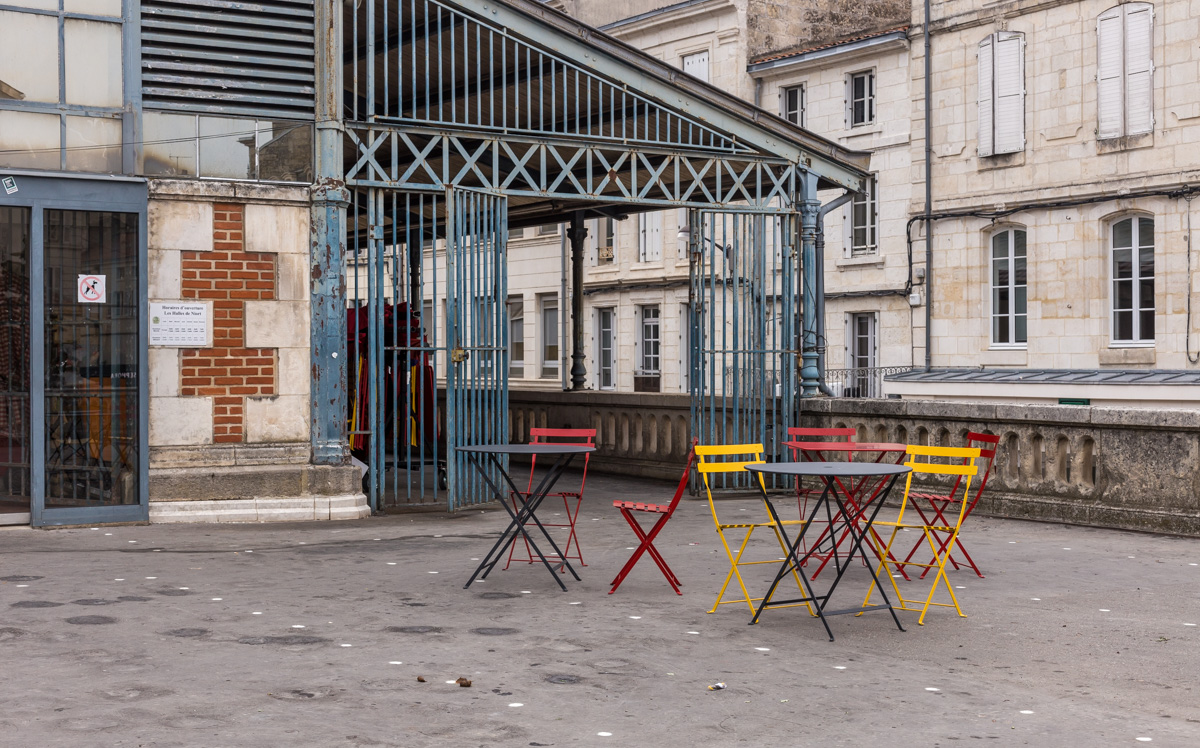
donjon, which is in the center of the old city, right next to the central market hall and not far from city hall.
The city side of the old donjon. It was a museum for a while, and now it serves as an exhibition space.
As usual, having the dog with us meant that we wouldn't see the interior, but that's ok. Walking around the outside was good enough. We've both been inside
donjons before and I'm sure we didn't miss much.